
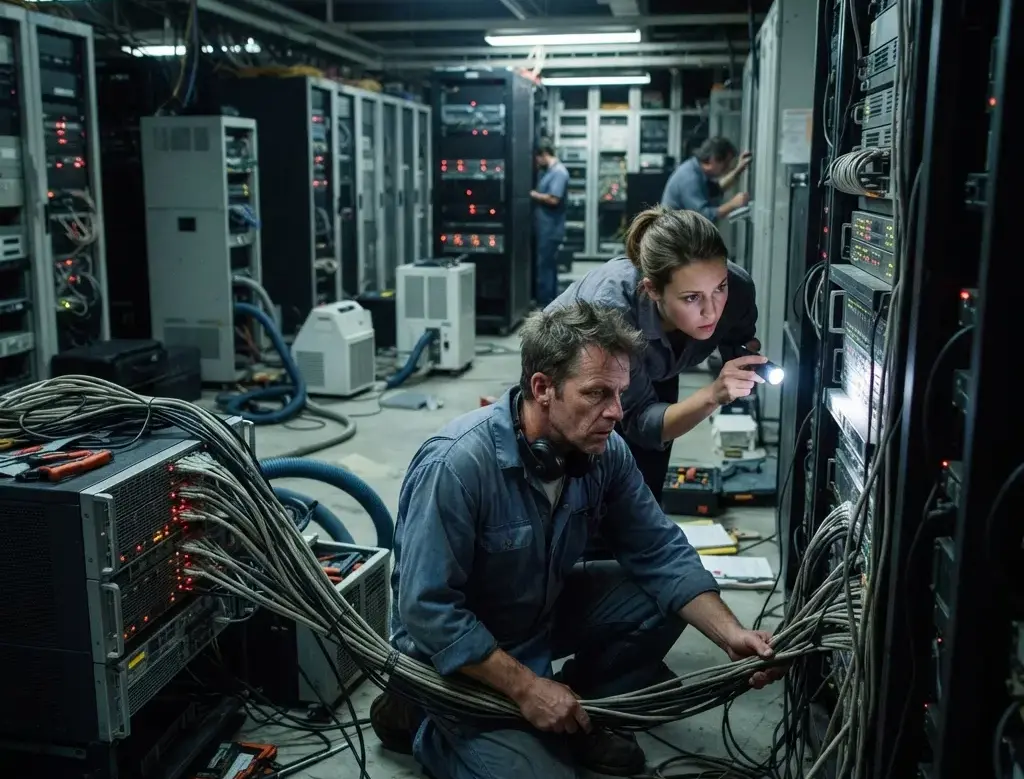
When a string of massive outages hits giants like Microsoft, Apple, and the FAA all in one week, the instinct for most people is to assume a sophisticated cyber attack or some sinister global conspiracy. However, security expert Bruce Schneier argues that the truth is far less dramatic and significantly more concerning. According to Schneier, these failures are not the work of hackers or rogue AI, but rather a series of unfortunate coincidences caused by an infrastructure that is fundamentally fragile and barely holding together.
The problem stems from a digital landscape built on aging foundations, often patched haphazardly over decades and sometimes maintained by unpaid hobbyists. As our critical systems become increasingly centralized, small errors now trigger cascading collapses that disrupt everything from air travel to banking. While these appear to be technical glitches, Schneier insists they are actually symptoms of a deeper economic disease. In a corporate world dominated by shareholder capitalism and private equity, long term stability is viewed as an unnecessary expense because it does not produce immediate profit.
Under this model, investing in redundancy and resilience is treated as an inefficiency to be trimmed away during quarterly budget cuts. Companies prioritize lean operations to maximize short term returns, effectively stripping away the safeguards that prevent total system failure. By cutting corners on reliability, corporations essentially privatize their gains while socializing the risk, leaving the general public to suffer the consequences when flights are canceled or bank accounts become inaccessible.
Solving these systemic crashes will require more than just better code or updated hardware. Schneier suggests that since the root cause is economic incentive, the solution must be political. He calls for aggressive regulation backed by heavy fines and strict antitrust enforcement to break up monopolies that stifle improvement. Without a fundamental shift in how we value infrastructure over dividends, he warns that we should expect these catastrophic failures to become an increasingly regular part of modern life.